Photo: steelers.com
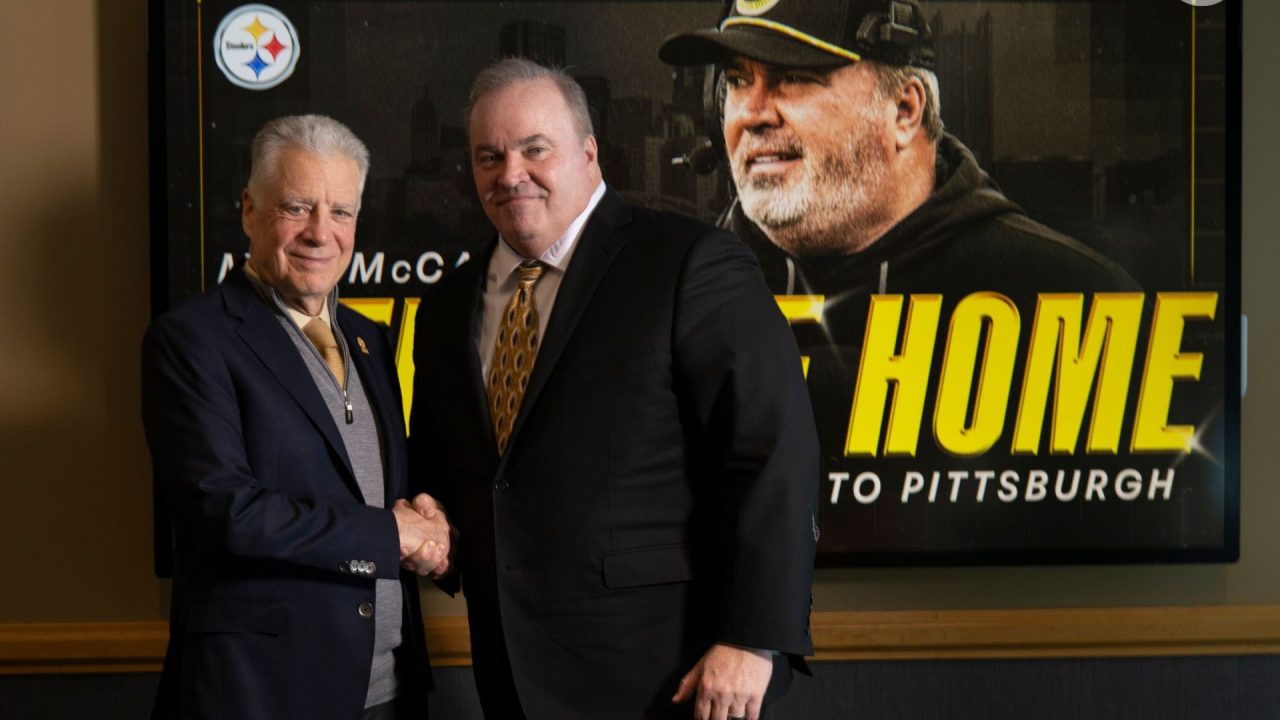
The Steelers’ overhaul under Mike McCarthy keeps gaining momentum, and the addition of James Campen as offensive line coach might be the most impactful move yet. Campen becomes one of six new offensive assistants brought in since McCarthy took over, but his arrival carries a different kind of weight. He’s a technician, a culture‑setter, and a coach with a long track record of elevating offensive fronts into cohesive, punishing units.
For a team that has struggled to find consistency in the trenches, Campen represents a chance to reset the identity of the offense at its foundation. If McCarthy’s vision is to build a more physical, quarterback‑friendly system, Campen is the hire with the clearest path to transforming that vision into something you can see on Sundays.
The move could also promote the Steelers into DFS darlings next season, with one of the best Fantasy operators being proactive and already prepping for Steelers-heavy DFS builds.
Campen brings three decades of NFL mileage with him, and it shows. He entered the league the hard way — undrafted, undersized, and unbothered — and still carved out an eight‑year career at center, starting 50 games between the Saints and Packers. That alone gives him a perspective most coaches can’t fake: he’s lived the grind, the technique, the week‑to‑week survival of life in the trenches.
When he hung up the pads, he didn’t drift far. Campen spent the next 20 years shaping offensive lines, including 15 seasons in Green Bay. Thirteen of those were under Mike McCarthy, where the two built the identity of those Packers fronts: physical but mobile, zone‑based but adaptable, and always anchored by linemen who could play multiple spots without the unit falling apart. Under Campen’s watch, players like Marco Rivera, Chad Clifton, and Scott Wells turned into Pro Bowlers — not because they were the biggest names, but because they were the most technically sound.
The results followed. During Campen’s run, Green Bay made ten playoff trips, claimed eight NFC North titles, and capped it with a Super Bowl XLV win — yes, the one that came at the Steelers’ expense. That history isn’t lost on anyone in Pittsburgh. The guy who helped engineer the last Super Bowl heartbreak for the franchise is now being asked to build the line that powers its next era.
Inside the building, there’s little debate: if you want McCarthy’s offense to take root, Campen is the coach who can translate it from the whiteboard to the field. He’s done it before, at a high level, for a long time — and now he gets a young, moldable Steelers line to work with.
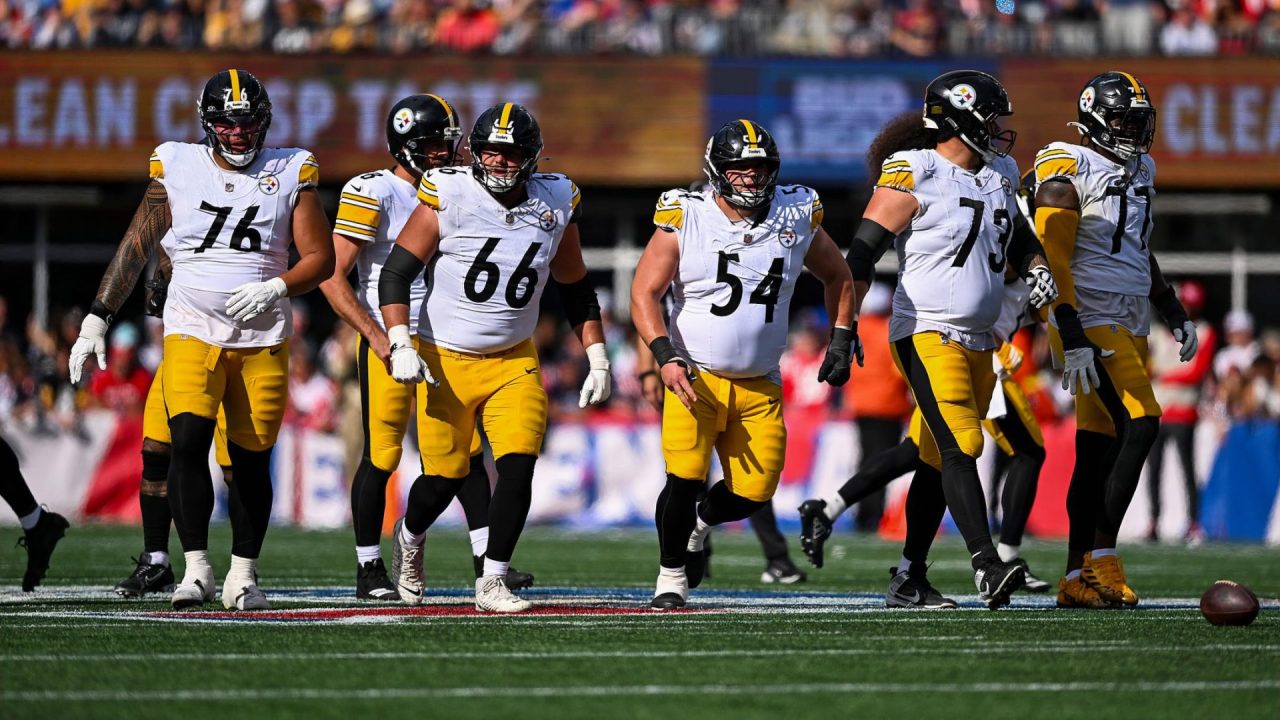
Campen inherits a room full of players still on rookie contracts, which is exactly the developmental window where a technician like him can make the biggest impact. Zach Frazier, Troy Fautanu, Broderick Jones, Dylan Cook, Spencer Anderson, and Mason McCormick aren’t rookies anymore, but they’re still early in their careers, still ascending, and still forming their long‑term habits. That’s prime territory for a coach who specializes in molding raw traits into polished, reliable starters.
Frazier gives him a center with the leverage and finish that fits Campen’s identity. Jones and Fautanu are high‑ceiling bookends drafted in the first round who need refinement to become long‑term anchors. Cook, an undrafted surprise last season, could project anywhere from being a starter to a depth piece who can grow into a swing role. Anderson provides true positional flexibility across the interior. while McCormick adds the physical edge and finishing ability that can set the tone inside.
It’s a young, cost‑controlled core with years of runway ahead of them — and Campen now gets to shape their trajectory from here.
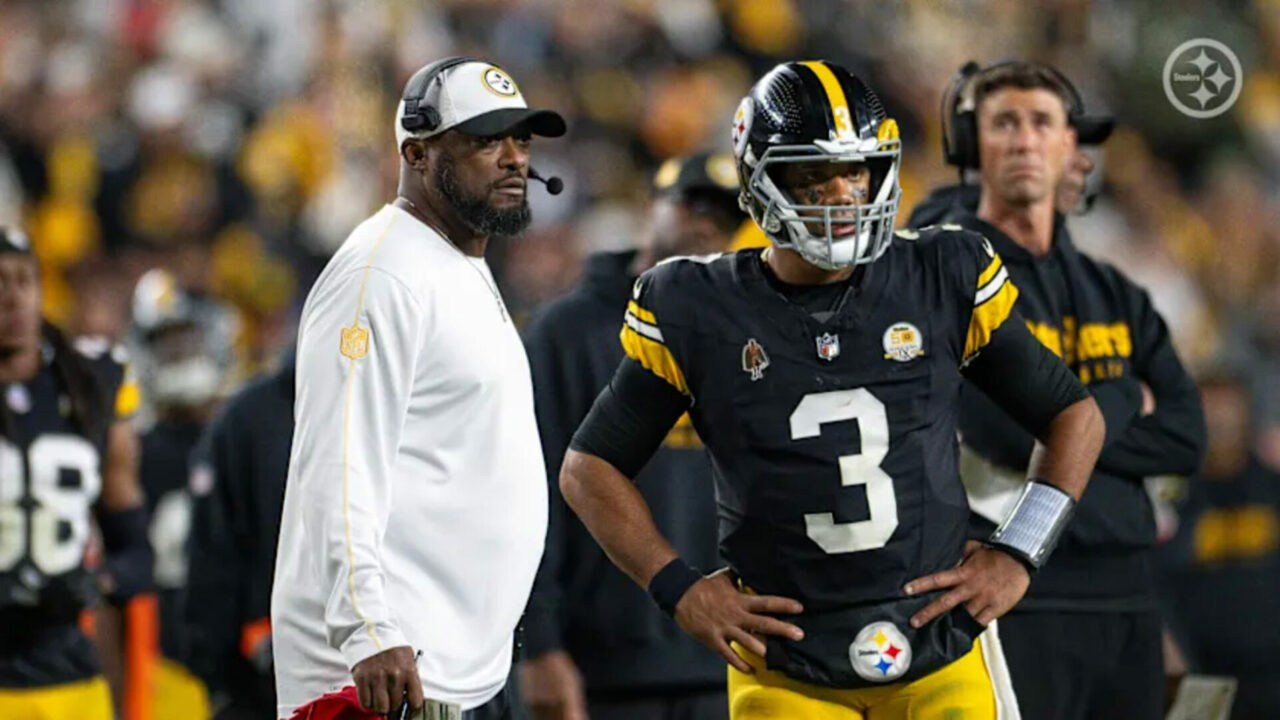
McCarthy arrives with more than a résumé — he arrives with a philosophy. A lifelong Steelers fan from Greenfield, he steps into the job not just to maintain what Mike Tomlin built over 19 seasons, but to reshape the identity of the offense itself. His vision is unapologetically quarterback‑centric and attack‑minded, with McCarthy taking back full control of play‑calling rather than delegating it to coordinators.
At the core of that vision is a belief he’s repeated for decades: the offense starts with the run game. A strong ground attack protects the quarterback, sets the rhythm, and unlocks the timing‑based structure of the West Coast system he’s committed to:
“The offense needs to be built to make the quarterback successful.”
That’s the blueprint McCarthy is bringing to Pittsburgh and why the Campen hire carries so much weight. McCarthy’s system demands precision, discipline, and consistency up front. The run game has to function. The protection has to hold. The timing has to stay intact. Campen has already helped McCarthy build top‑tier offenses once before in Green Bay, and the expectation inside the building is clear: they’re here to do it again.
McCarthy’s system is built to elevate quarterbacks, but the lingering question is whether Aaron Rodgers will be the one operating it. The 42‑year‑old was widely expected to hit free agency in March, and for most of the year it felt like 2025 might be his final run. McCarthy’s arrival, though, adds a wrinkle. Their shared history — and the QB‑friendly structure of this revamped offense — gives Rodgers every reason to at least reconsider.
Still, nothing is settled. Rodgers could walk, leaving Pittsburgh to navigate a thin free‑agent market and an even thinner draft class. McCarthy’s track record with young quarterbacks matters here, and his public excitement about working with Will Howard wasn’t accidental. If Rodgers moves on, Howard becomes the natural pivot. Whether the Steelers add another arm through free agency or the draft remains one of the biggest variables of the offseason.