Photo: steelers.com
For nearly three quarters on Sunday, the Steelers looked like a team that had left its offensive momentum back in Pittsburgh. After putting together their most complete performance of the season against the Colts a week earlier, the Steelers struggled to move the football against Tampa Bay, committed an early turnover and couldn’t find the end zone through the first three quarters.
By the time the Buccaneers extended their lead to 16-3 midway through the third quarter, Pittsburgh appeared headed toward another frustrating afternoon.
Instead, the Steelers found a way to turn things around, scoring 16 unanswered points in the fourth quarter before Aaron Rodgers connected with Germie Bernard for the go-ahead touchdown in overtime. Pittsburgh’s defense then finished the job, securing a 26-19 victory that improved the Steelers to 4-2.
It wasn’t particularly pretty, but there was plenty to take away from how Pittsburgh responded when things weren’t going its way.
It’s difficult to overlook just how ineffective Pittsburgh’s offense was during the first three quarters. The Steelers managed only three points, struggled on third down and repeatedly found themselves behind the chains against a Tampa Bay defense that generated pressure throughout the afternoon.
Aaron Rodgers was intercepted on Pittsburgh’s second possession, setting up the Buccaneers’ first field goal. Later, a promising second-quarter drive ended when Chris Boswell missed a 48-yard attempt. Pittsburgh didn’t get on the scoreboard until Boswell connected from 52 yards as the first half expired.
The struggles continued after halftime, with the Steelers opening the third quarter with consecutive three-and-outs while Tampa Bay put together a 17-play drive that consumed more than nine minutes and extended its lead to 16-3.
However, Pittsburgh finally began moving the football late in the third quarter.
An eight-play, 68-yard possession carried into the fourth, where Rodgers found Darnell Washington for a five-yard touchdown to cut the deficit to six points. From there, the Steelers continued chipping away. Boswell connected on field goals of 39 and 58 yards to tie the game before his 20-yard kick gave Pittsburgh its first lead with 1:21 remaining.
That lead didn’t last, but the offense saved its best possession for overtime. Rodgers directed a 12-play, 70-yard drive that consumed 6:45 and ended with Bernard’s six-yard touchdown reception.
The final numbers weren’t overwhelming. Pittsburgh finished with 300 total yards and converted only five of 15 third downs. Still, the offense demonstrated an ability to adjust and sustain drives when it mattered most.
With Michael Pittman Jr. on injured reserve and Roman Wilson and Ben Skowronek unavailable, Pittsburgh entered Sunday’s matchup needing contributions from receivers who hadn’t necessarily been expected to carry a significant portion of the offense.
Bernard stepped into that opportunity and delivered one of the most important performances of the afternoon.
The young receiver caught 11 passes for 87 yards and a touchdown, establishing himself as a dependable option for Rodgers against a defense that made life difficult for Pittsburgh’s passing attack.
His production was particularly valuable during the first half, when the Steelers struggled to generate explosive plays. Bernard helped keep several possessions alive with short and intermediate receptions, giving Rodgers another option when Tampa Bay brought pressure.
Of course, the biggest moment came in overtime, when Bernard hauled in his first NFL touchdown to give Pittsburgh a seven-point advantage.
DK Metcalf also deserves credit for his contributions. Despite the attention he received from Tampa Bay’s defense, Metcalf finished with 11 catches for 93 yards, providing several important receptions during Pittsburgh’s comeback.
Between Bernard and Metcalf, the Steelers received 186 receiving yards and 22 receptions, accounting for most of Rodgers’ passing production.
While the offense struggled through much of the afternoon, Pittsburgh’s defense prevented Tampa Bay from putting the game completely out of reach.
The Buccaneers finished with only 224 total yards, including 122 net passing yards, and were limited to one touchdown. Pittsburgh also held Tampa Bay to six conversions on 19 third-down attempts, forcing the Buccaneers to settle for field goals on several possessions.
That was especially important during the third quarter, when Tampa Bay put together a 17-play, 70-yard drive that consumed 9:02. Despite moving deep into Pittsburgh territory, the Buccaneers managed only a 33-yard field goal.
Those four points left on the field became increasingly important as the Steelers mounted their comeback. Pittsburgh also generated five sacks for 42 yards, with Nick Herbig recording two and Jalen Ramsey adding two more. Herbig’s pressure helped disrupt Tampa Bay’s passing game, while Ramsey contributed in several areas of the defense.
The Steelers’ ability to contain Bucky Irving was another significant development. Irving finished with 46 rushing yards on 19 attempts, averaging just 2.4 yards per carry.
There were still some problems, particularly when Daniels escaped the pocket, but Pittsburgh’s defense largely accomplished what it needed to do against Tampa Bay’s rushing attack.
The Steelers’ defense didn’t simply keep the score manageable. It also provided the offense with opportunities to complete the comeback.
Early in the fourth quarter, D’Everett Everette intercepted Daniels at the Tampa Bay 45-yard line, giving Pittsburgh excellent field position while trailing 16-10. The Steelers converted that opportunity into a 39-yard Boswell field goal, cutting the deficit to three points.
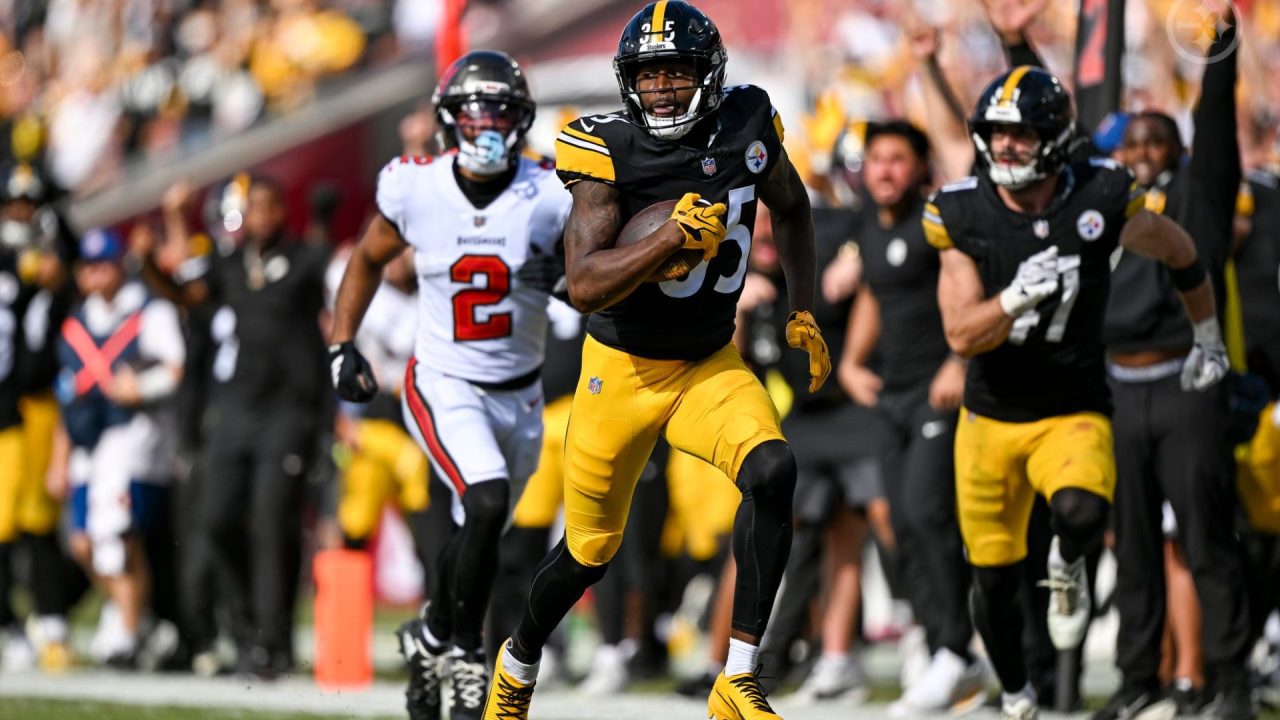
Later, with the game tied at 16 and less than two minutes remaining, Jamel Dean made an even bigger play. Dean intercepted Daniels at the Buccaneers’ 43-yard line and returned the football 40 yards to the Tampa Bay 3. Pittsburgh couldn’t punch the ball into the end zone, but Boswell’s 20-yard field goal gave the Steelers their first lead of the afternoon.
Although Tampa Bay managed to tie the game and force overtime, those two interceptions were instrumental in changing the momentum.
For a Steelers defense that had been searching for more disruptive plays, the fourth quarter provided exactly what was needed.
There was a time when Boswell’s missed 48-yard field goal in the second quarter looked like it might become one of the more frustrating moments of Pittsburgh’s afternoon.
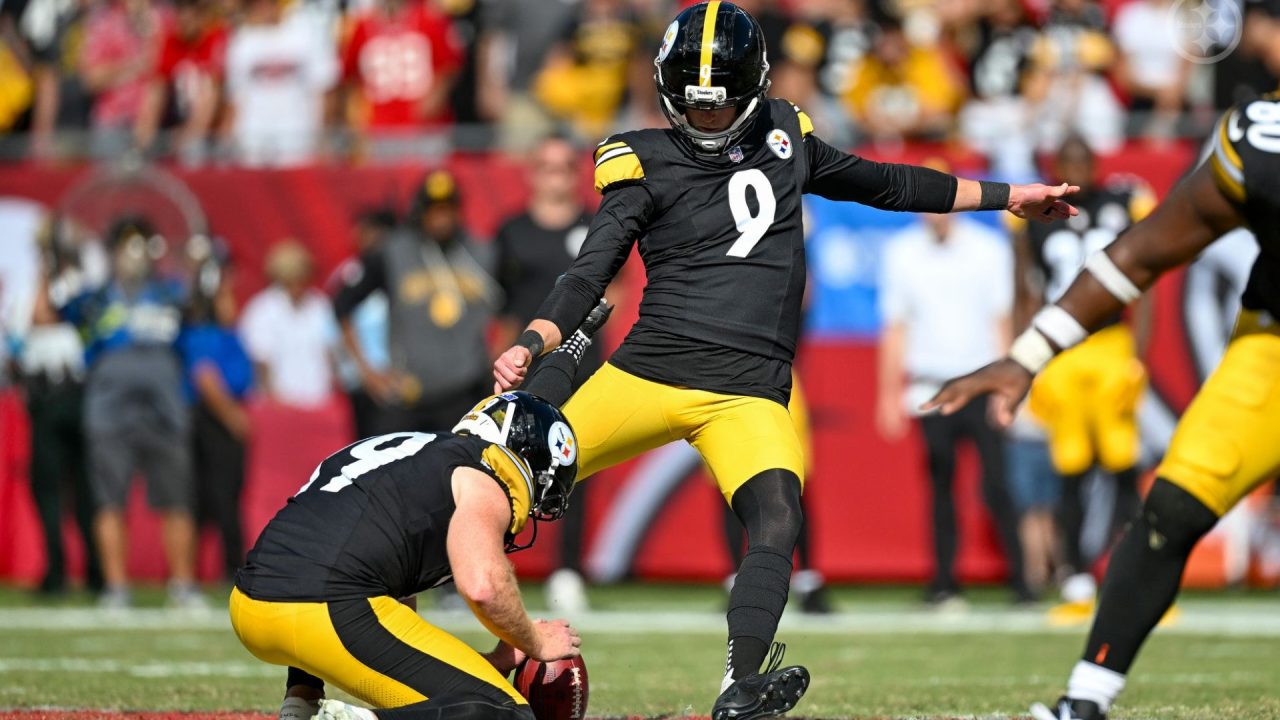
Instead, the veteran kicker bounced back and finished four-for-five on field goal attempts, connecting from 52, 39, 58 and 20 yards.
The 58-yarder was particularly important, tying the game at 16 with 1:55 remaining in regulation. Boswell then delivered from 20 yards following Dean’s interception to give Pittsburgh the lead.
In total, Boswell accounted for 14 of the Steelers’ 26 points, including two extra points. He would also break the franchise’s all-time field goals record, long held by Gary Anderson, during the afteroon.
It’s easy to take that level of reliability for granted, but Pittsburgh needed every one of those points to overcome its offensive struggles.
Winning certainly makes the trip home more enjoyable, but the Steelers shouldn’t ignore the problems that nearly cost them Sunday’s game.
Rodgers was sacked five times for 42 yards, and Pittsburgh’s offense struggled to protect him against Tampa Bay’s pressure packages. The Steelers also converted only one of their first six third-down opportunities during the opening half, making it difficult to sustain possessions.
The running game wasn’t particularly productive, either. Jaylen Warren finished with 50 yards on 14 carries, while Rico Dowdle added 40 yards on seven attempts. Pittsburgh totaled 89 rushing yards and averaged four yards per attempt.
There were also missed opportunities near the goal line. After Dean returned his interception to the Tampa Bay 3, the Steelers gained only two yards on three plays before settling for a field goal.
Those are the types of situations that can make the difference against stronger opponents, particularly when the offense isn’t generating many explosive plays.
There are easier ways to win a football game than falling behind by 13 points and needing overtime to finish the job. However, the Steelers demonstrated something important Sunday by refusing to let their early struggles determine the outcome.
The defense kept Tampa Bay from building an insurmountable lead, the offense adjusted as the game progressed, and several players stepped up when Pittsburgh needed them most.
Bernard’s first NFL touchdown provided the finishing touch, but the comeback required contributions from throughout the roster.
The Steelers leave Tampa Bay at 4-2 with consecutive victories and plenty of reasons to feel encouraged. Now the challenge is finding a way to play with the same urgency and execution before falling into another double-digit deficit.