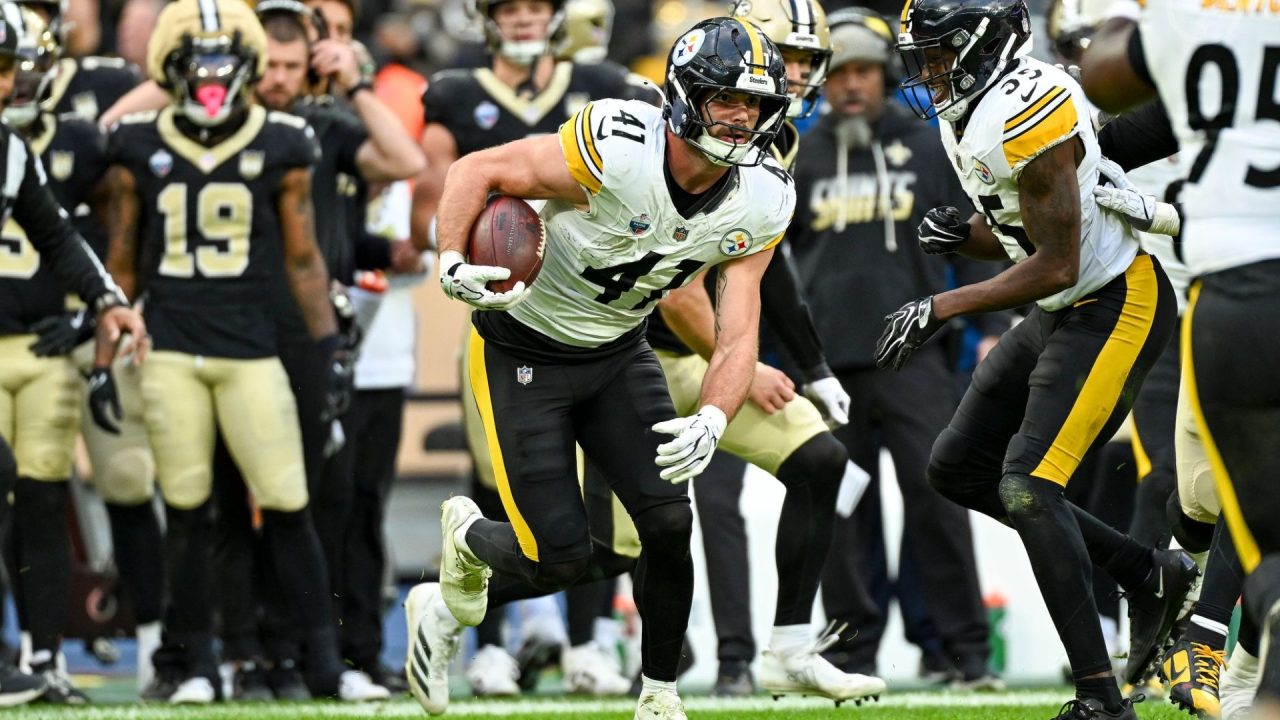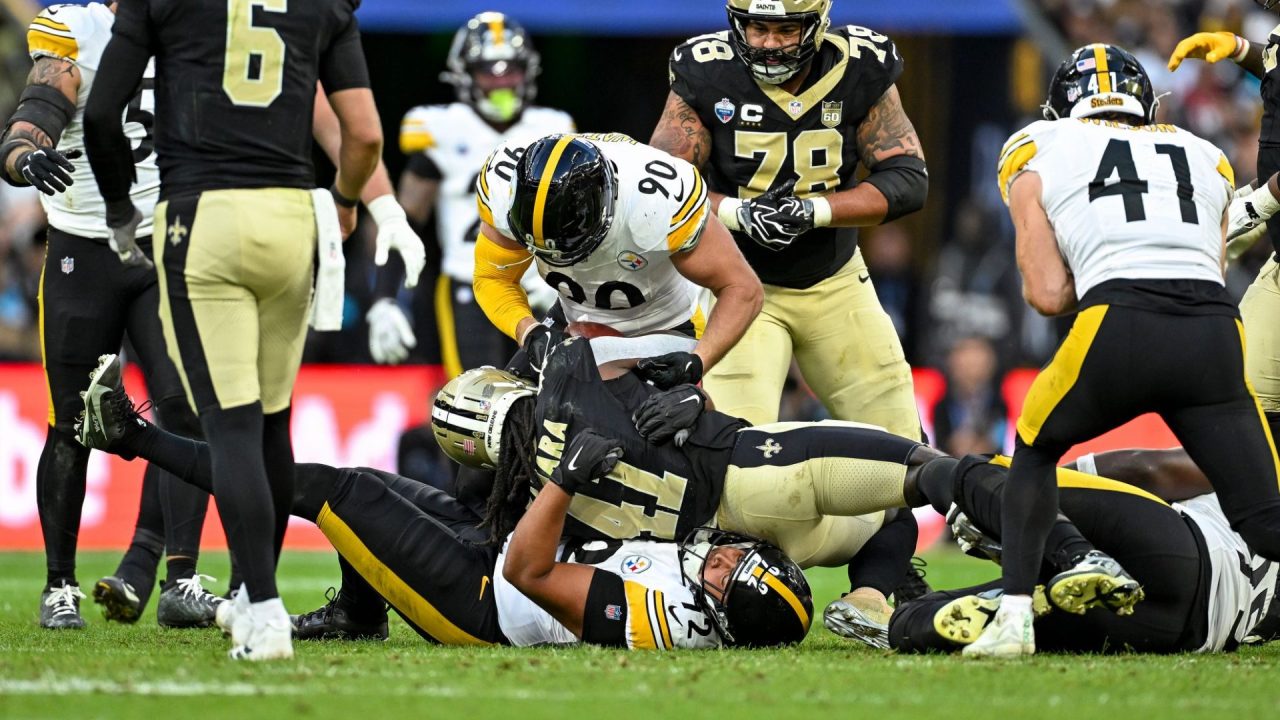
Photo: steelers.com
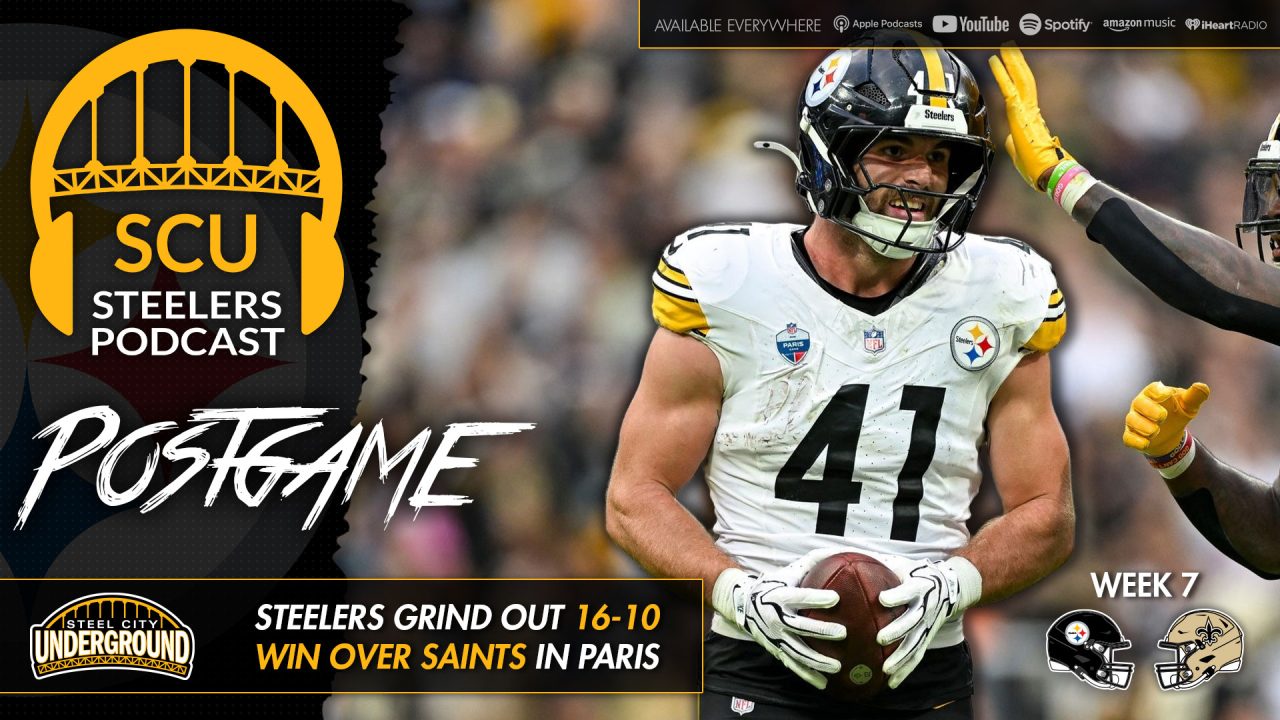
The Pittsburgh Steelers returned from their historic trip to Paris with another victory, improving to 5-2 following Sunday’s 16-10 win over the New Orleans Saints. While the final score wasn’t particularly impressive, the Steelers accomplished what they needed to do, extending their winning streak to three games heading into a rematch with the Cleveland Browns.
As we’ve seen throughout the season, however, the result doesn’t always tell the entire story. Pittsburgh’s defense delivered another strong performance, the running game found success, and the offense showed some encouraging improvement on third downs. Yet the Steelers also struggled to turn those opportunities into points, allowing New Orleans to remain within striking distance until the final minutes.
There were certainly a few things that caught our attention, both good and bad. Here are the biggest surprises from Pittsburgh’s victory in France.
It’s one thing to limit an opponent’s rushing attack. It’s another to practically eliminate it from the game altogether, which is exactly what Pittsburgh accomplished against New Orleans.
The Saints finished with just 18 rushing yards on 17 attempts, averaging an almost unbelievable 1.1 yards per carry. Alvin Kamara, who has been one of the NFL’s more dangerous dual-threat running backs throughout his career, managed only five yards on six carries. Kendre Miller wasn’t much better, finishing with six yards on eight attempts.
What made this performance particularly surprising was how thoroughly the Steelers controlled the line of scrimmage. New Orleans couldn’t establish any consistency on early downs, leaving quarterback Tyler Shough to manufacture offense almost exclusively through the passing game.
Patrick Queen, T.J. Watt and Keeanu Benton were among the defenders who helped make life difficult for the Saints. Pittsburgh’s defensive front deserves considerable credit for making New Orleans so one-dimensional, especially in a game where every possession mattered.
Jaylen Warren rightfully received plenty of attention for his 101-yard rushing performance, but Rico Dowdle quietly put together one of his more productive all-around outings in a Steelers uniform.
Dowdle finished with nine carries for 41 yards, but what surprised me was his involvement as a receiver. He caught six passes for 45 yards, giving him 86 total yards from scrimmage. Those six receptions were also the most by any Steelers player on Sunday.
With Aaron Rodgers often looking for shorter, higher-percentage throws, having another running back capable of contributing through the air gives Pittsburgh some additional flexibility. It also helps a Pittsburgh offense missing several receivers, especially with some looks featuring both Dowdle and Warren in the backfield simultaneously.
There were also big-play contributons too, as Dowdle also delivered a 16-yard run to open the Steelers’ final possession, helping the offense begin its clock-killing drive.
We’ve talked plenty about Warren needing more opportunities, and Sunday’s performance reinforced that argument. However, Dowdle’s contributions demonstrated that Pittsburgh doesn’t necessarily have to choose between the two. There’s room for both backs to make meaningful contributions when the offense commits to using them effectively.
Considering how frequently Pittsburgh’s offense has struggled to sustain possessions this season, Sunday’s third-down performance was a pleasant surprise. The Steelers converted 10 of their 16 opportunities, finishing with a 62.5 percent success rate.
That included several conversions in situations where Pittsburgh appeared headed toward another punt. Aaron Rodgers connected with DK Metcalf for 51 yards on third-and-14 during the second quarter, setting up Darnell Washington‘s touchdown. Later, Germie Bernard hauled in a 20-yard reception on third-and-10 during the final possession of the first half.
Warren also helped keep drives alive on the ground, while Rodgers used his legs to convert a third-and-six during Pittsburgh’s final possession. Those plays helped the Steelers finish with 20 first downs and maintain possession for more than 32 minutes.
The offense wasn’t perfect by any stretch, but converting third downs at that rate is an encouraging development for a team that has spent much of the season searching for consistency.
Here’s where things get frustrating. For all the positive developments on offense, the Steelers still managed just one touchdown against a Saints defense that entered the game with plenty of problems of its own.
Pittsburgh accumulated 343 total yards, rushed for 148 and converted 10 third downs. Those numbers should have translated into more than 16 points, particularly when the Steelers reached the red zone four times.
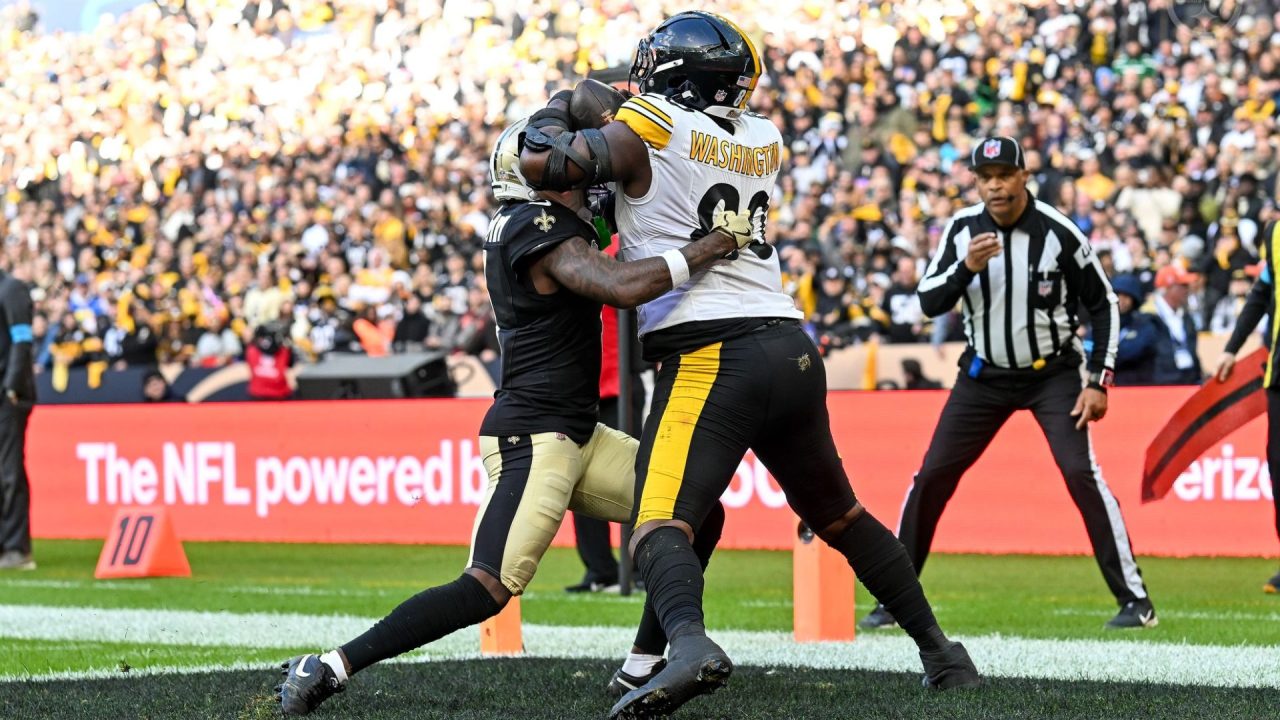
Instead, Washington’s four-yard touchdown reception was Pittsburgh’s only trip to the end zone. Chris Boswell connected on all three of his field-goal attempts, accounting for 10 of the Steelers’ 16 points when including his extra point.
Even more concerning was the lack of production after halftime. Pittsburgh managed only three points over the final two quarters despite controlling the football for lengthy stretches. The Steelers deserve credit for finding ways to win, but there’s a difference between playing complementary football and relying on the defense to compensate for an offense that isn’t finishing drives.
That approach worked against New Orleans. It’s difficult to imagine it being sustainable every week, particularly against opponents capable of putting more points on the scoreboard.
Perhaps the biggest surprise came during the final minutes, when Pittsburgh managed to do something that has occasionally seemed much harder than it should be: close out a football game without giving the opponent another opportunity.
Leading 16-10 with 5:52 remaining, the Steelers took possession at their own 35-yard line following a Saints punt. Rather than going three-and-out and asking the defense to protect a six-point advantage, Pittsburgh put together a possession that consumed the remainder of the game.
Dowdle’s 16-yard run got things started, and Rodgers later scrambled for eight yards on third-and-six to extend the drive. A New Orleans offside penalty during a late Boswell field-goal attempt provided another first down, allowing Pittsburgh to finish with two kneel-downs. (Though Boswell’s kick was good and would’ve secured a nine-point advantage without the flag.)
Granted, the Saints helped the Steelers out with that penalty, but Pittsburgh had already done the necessary work to put itself in position to finish the game. Given how often we’ve watched the Steelers leave the door open for opponents, it was refreshing to see the offense take control of the final minutes.
The Steelers certainly didn’t put together their most impressive offensive performance in Paris, but there were enough positive developments to build upon. The running game continues to improve, the defense is making timely plays, and the offense demonstrated that it can sustain possessions when it executes on third down.
Still, the inability to finish drives remains an issue that Pittsburgh can’t afford to ignore. With the Browns coming to town next Sunday and a bye week immediately afterward, the Steelers have an opportunity to reach 6-2 before getting some much-needed rest.
Three consecutive wins are nothing to complain about, but there’s still plenty of room for improvement. The encouraging part is that Pittsburgh has been able to address those shortcomings while continuing to add victories to its record.