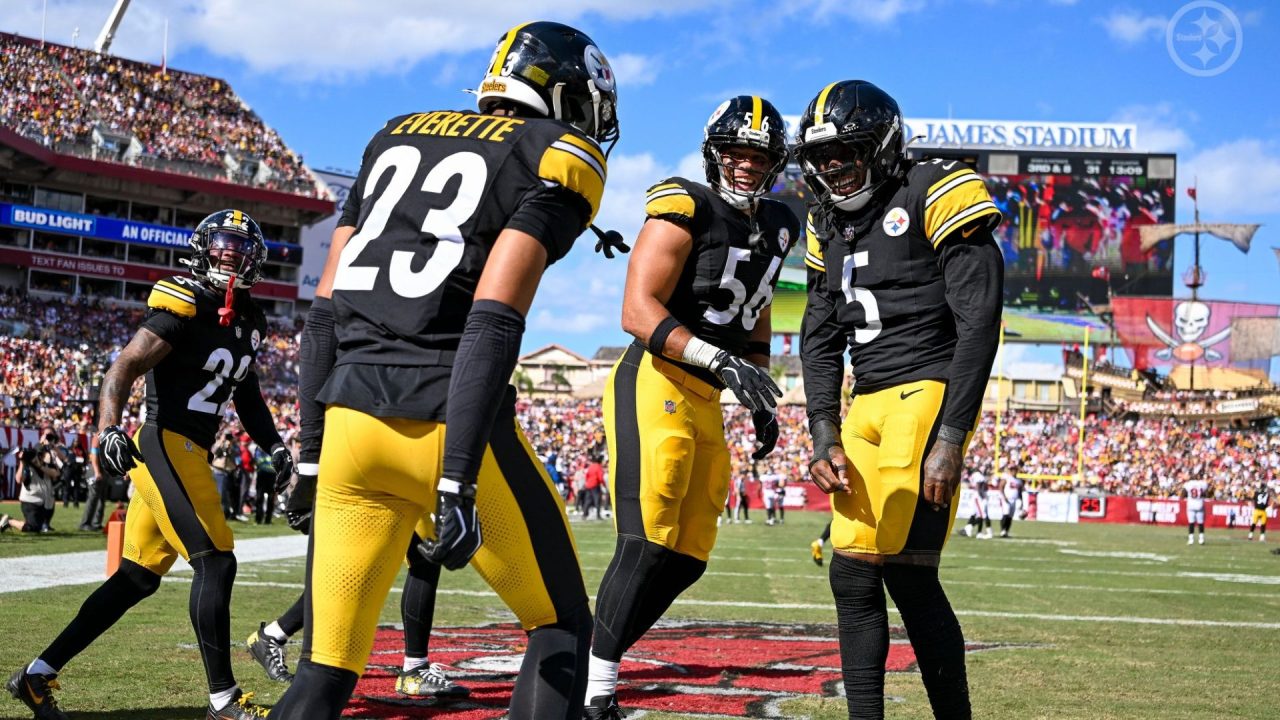
Photo: steelers.com
The Pittsburgh Steelers entered Sunday’s matchup with the Tampa Bay Buccaneers hoping to build on the offensive progress they demonstrated against Indianapolis. Instead, they spent most of the afternoon trying to figure out how to move the football against a defense that seemed to have an answer for nearly everything.
With Pittsburgh trailing 16-3 late in the third quarter, there wasn’t much reason to believe the Steelers were about to put together one of their more memorable comebacks of the season.
Yet that’s exactly what happened.
The Steelers rallied to force overtime before Aaron Rodgers connected with Germie Bernard for the go-ahead touchdown, and the defense closed out a 26-19 victory that improved Pittsburgh to 4-2.
There were several unexpected developments along the way, including some performances that deserve a closer look.
There were plenty of questions about Pittsburgh’s receiving corps heading into Sunday. With several players unavailable due to injuries, the Steelers needed someone to emerge as a dependable option alongside DK Metcalf.
Bernard didn’t just fill that role. He became one of the biggest reasons Pittsburgh managed to escape Tampa Bay with a victory.
The receiver finished with 11 catches for 87 yards and a touchdown, leading the Steelers in receptions while providing Rodgers with a reliable target throughout the afternoon.
What made Bernard’s performance particularly impressive was how consistently he contributed when Pittsburgh’s offense was struggling. His receptions helped move the chains during the first half, and he continued making plays as the Steelers began their comeback.
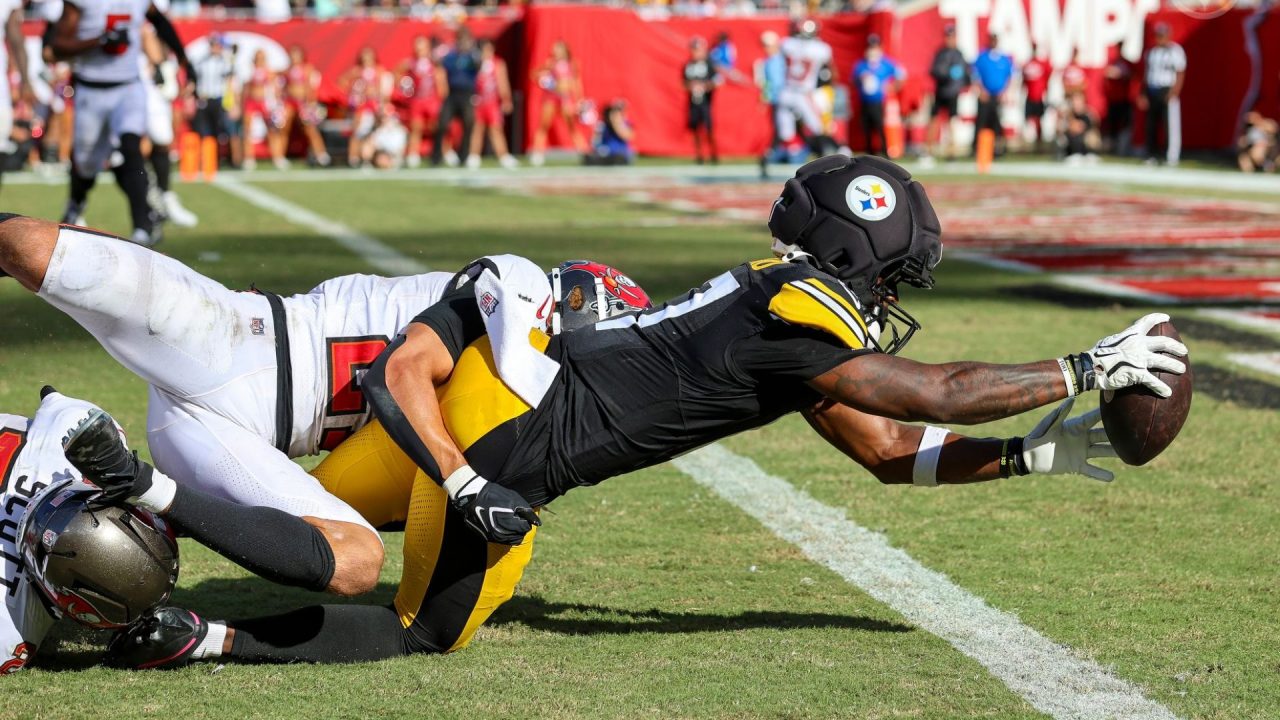
Then came overtime: on second-and-six from the Tampa Bay 6-yard line, Rodgers connected with Bernard for his first NFL touchdown. The score capped a 12-play, 70-yard possession and gave Pittsburgh a seven-point advantage.
Considering the circumstances surrounding Pittsburgh’s receiving corps, Bernard’s performance was easily one of Sunday’s most encouraging surprises.
When discussing Pittsburgh’s pass rush, the conversation usually begins with T.J. Watt, Alex Highsmith and Nick Herbig. However, one of Sunday’s biggest defensive surprises came from a player better known for his work in the secondary.
Jalen Ramsey finished with two sacks for 26 yards, adding another dimension to a Steelers defense that repeatedly disrupted Tampa Bay quarterback Jalon Daniels.
Ramsey’s first sack came on the Buccaneers’ opening possession, when he dropped Daniels for a 15-yard loss on third down. That helped force an early punt and immediately demonstrated how Pittsburgh could create pressure from different locations.
His second sack came in overtime, with Tampa Bay attempting to answer Pittsburgh’s touchdown. Facing fourth-and-eight near midfield, Daniels was dropped for an 11-yard loss, ending the Buccaneers’ final possession.
Ramsey also finished with 10 combined tackles, making him one of Pittsburgh’s most active defenders throughout the afternoon.
For a defense that had been looking for more consistent pressure, Ramsey’s contributions were a welcome development.
Herbig’s ability to get after the quarterback isn’t necessarily surprising anymore, but his performance against Tampa Bay deserves recognition.
The Steelers linebacker recorded two sacks for 15 yards and five combined tackles, helping Pittsburgh finish with five sacks against Daniels.
His first sack came during Tampa Bay’s touchdown drive spanning the first and second quarters, dropping Daniels for a 10-yard loss. The Buccaneers eventually overcame the setback, but Herbig’s pressure was an early indication that Pittsburgh could make life difficult for the young quarterback.
Herbig added another sack late in the fourth quarter, dropping Daniels for a five-yard loss as Tampa Bay attempted to move into position for a tying field goal. Although the Buccaneers ultimately converted that opportunity, Herbig’s activity was part of a defensive effort that limited Tampa Bay to 224 total yards.
With Watt drawing considerable attention from opposing offenses, Pittsburgh needs other players capable of creating pressure. Herbig continues showing why he deserves opportunities to do exactly that.
One of Sunday’s most important plays came from Dean, who gave Pittsburgh an opportunity to complete its comeback before overtime was necessary.
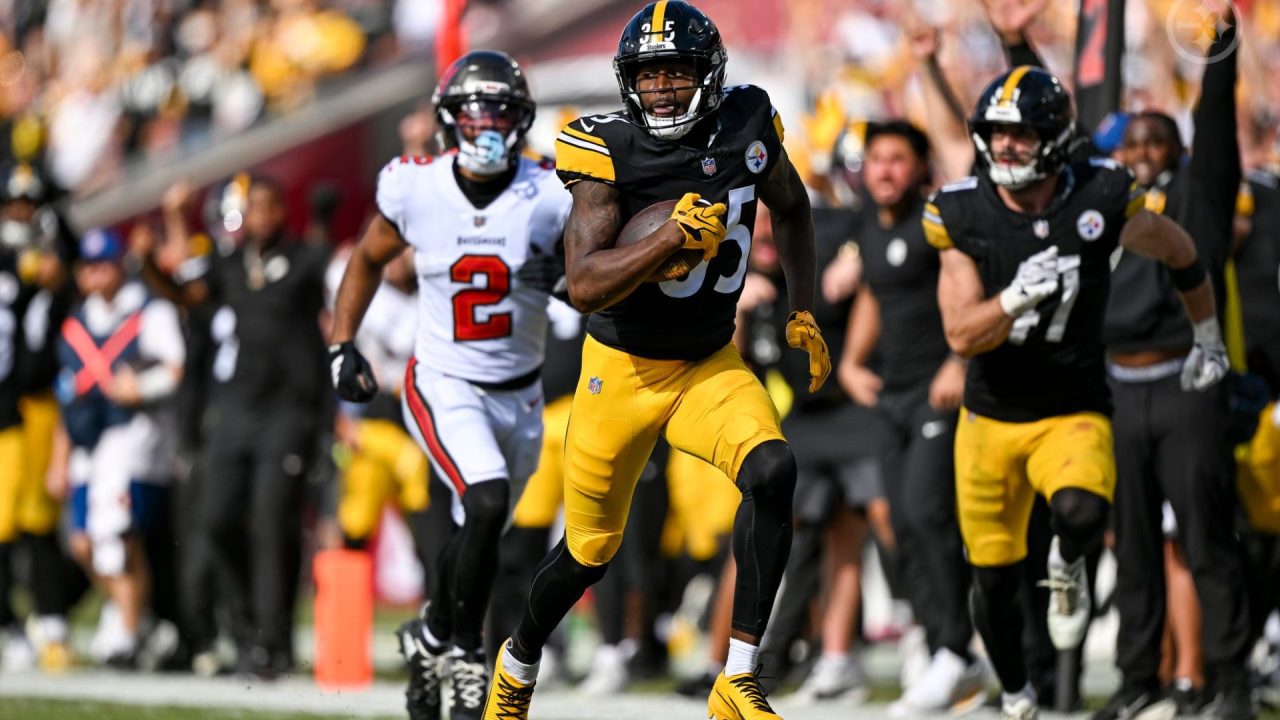
With the game tied at 16 and 1:46 remaining, Dean intercepted Daniels at the Tampa Bay 43-yard line and returned the football 40 yards to the Buccaneers’ 3. It was a remarkable change in field position and put the Steelers in an ideal situation to take the lead.
Unfortunately, Pittsburgh’s offense couldn’t capitalize with a touchdown. The Steelers gained only two yards on three plays before Chris Boswell connected from 20 yards to make the score 19-16. Tampa Bay eventually answered with a field goal to force overtime, but Dean’s interception was still one of the biggest defensive moments of the afternoon.
It also continued a fourth-quarter turnaround that began when D’Everett Everette intercepted Daniels earlier in the period. Those two takeaways helped Pittsburgh overcome an offense that had struggled for much of the game.
One of the biggest concerns heading into Sunday was whether Pittsburgh could contain Bucky Irving and a Buccaneers rushing attack capable of controlling possession.
Instead, the Steelers limited Irving to 46 yards on 19 carries, an average of just 2.4 yards per attempt.
That was particularly important because Tampa Bay appeared content to rely on its running game while protecting a lead. The Buccaneers put together a 17-play possession during the third quarter, consuming more than nine minutes and moving deep into Pittsburgh territory.
However, that drive ended with only a field goal, and Tampa Bay never established the type of consistent rushing success that could have helped put the game away. The Buccaneers finished with 102 rushing yards overall, but 39 of those came from Daniels on four attempts. Pittsburgh’s ability to contain Irving made it much more difficult for Tampa Bay to sustain its offense without relying on the quarterback.
After the Steelers struggled at times to control opposing running games earlier in the season, Sunday’s performance was an encouraging development.
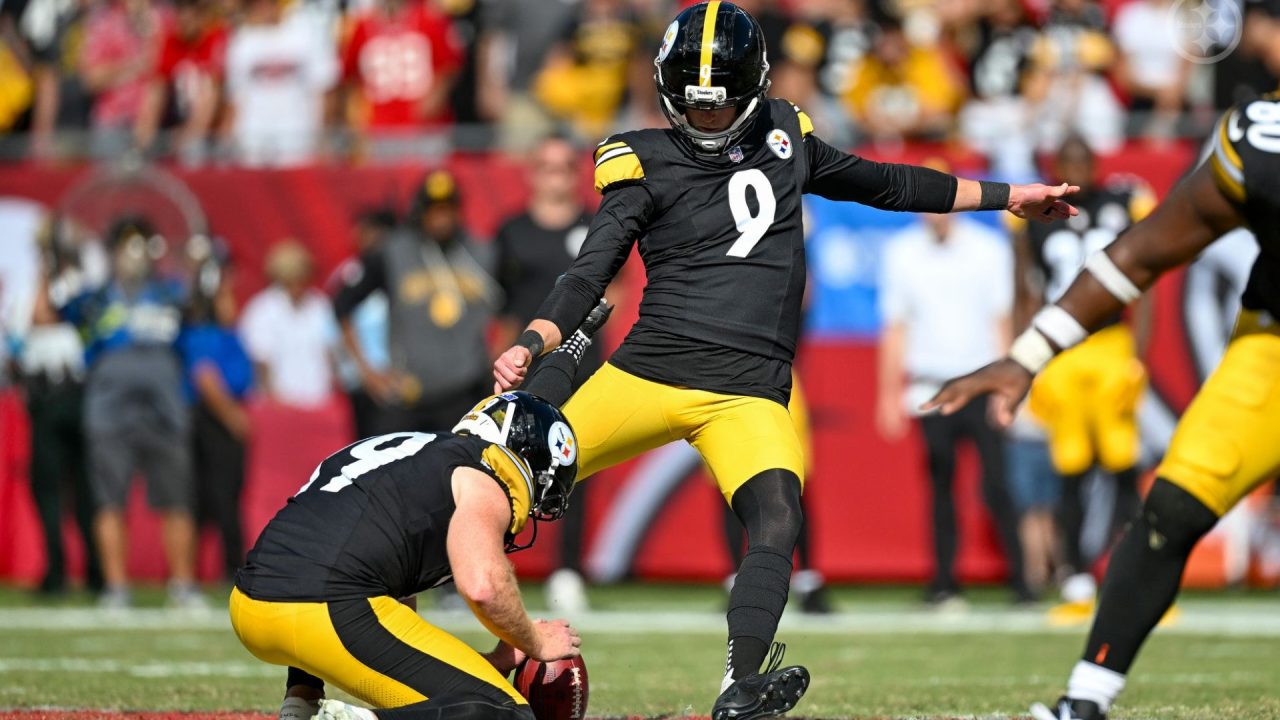
There aren’t many Steelers fans who expect Boswell to miss when he lines up for a field goal, which made his unsuccessful 48-yard attempt in the second quarter an unwelcome surprise. Fortunately, that miss didn’t define his afternoon.
Boswell responded by connecting on four consecutive field goals, including attempts from 52 and 58 yards. The latter tied the game at 16 with less than two minutes remaining in regulation, setting the stage for Pittsburgh’s late defensive takeaway. He also connected from 20 yards to give the Steelers their first lead before Tampa Bay forced overtime.
Boswell finished with 14 points, accounting for more than half of Pittsburgh’s scoring.
It’s difficult to imagine the Steelers completing their comeback without his contributions, especially considering how much trouble the offense had finding the end zone during regulation.
Sunday’s victory wasn’t the type of performance that will convince everyone the Steelers have solved their problems. Pittsburgh struggled offensively for nearly three quarters, allowed five sacks and needed a significant second-half turnaround just to force overtime.
It was also mired with an odd set of coaching decisions, and seeing Steelers head coach Mike McCarthy inside the medical tent for all of halftime. Regardless, there were plenty of encouraging developments hidden within those struggles.
Bernard delivered a breakout performance when Pittsburgh desperately needed help at receiver. Ramsey and Herbig provided disruptive plays defensively, while Dean’s interception helped turn the momentum late in regulation.
Perhaps most importantly, the Steelers found a way to win a game that appeared to be slipping away. At 4-2, Pittsburgh has now won consecutive games, but Sunday’s performance also served as a reminder that there is still considerable room for improvement.
The Steelers will gladly take the victory. The challenge now is finding a way to avoid needing another dramatic comeback to get the next one.